
Who Decides What's Good or Evil?
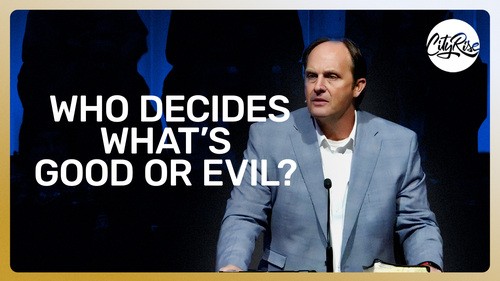
We live in a time where people on every side of cultural and moral debates accuse one another of being evil. The confusion is real, and the tension is high. Each group claims moral high ground, believing their truth is the right one. But when everyone defines good and evil for themselves, who is right?
Isaiah 5:20 gives us a sobering warning: “Woe to those who call evil good and good evil, who put darkness for light and light for darkness.” Though written centuries before the time of Christ, these words speak clearly to the world we live in today.
So, how do we discern what is truly good? Who sets the standard?
The Origin of Good: God's Definition at Creation
To answer that, we have to go back to the beginning—Genesis 1. There, before any human being existed, God created the heavens and the earth. As He created, He declared certain things to be good.
When God said, “Let there be light,” and there was light, He saw that it was good (Genesis 1:3). As He continued to form the land, the seas, the vegetation, the stars, and the seasons, Scripture repeats a consistent phrase: “God saw that it was good.”
This word good is the Hebrew word tov. And it is essential to notice something here: God defines what is good before mankind ever exists. He is the one creating, and He is the one declaring what is good.
This tells us something crucial. Goodness is not subjective. Goodness is determined by the Creator.
The Introduction of Choice: The Knowledge of Good and Evil
In Genesis 2, God places man in the garden and gives him a command. He is free to eat from every tree except one—the tree of the knowledge of good and evil. This moment introduces not just the idea of moral boundaries, but also the human capacity to choose. God says, “In the day you eat of it, you shall surely die” (Genesis 2:17).
Then in Genesis 3, the serpent appears and begins the first deception. He questions God’s word and suggests a different version of the truth. “You will not surely die… you will be like God, knowing good and evil.” Eve sees the fruit, decides it looks good, and eats. Adam, with her, does the same.
This decision changes everything. The original temptation was not just to disobey—it was to become the definer of truth. To choose what is good in one’s own eyes. This is what ushered sin into the human experience.
That same lie is still whispered today. When we hear things like “live your truth” or “follow your heart,” we are hearing echoes of Eden. The serpent’s tactic hasn’t changed. His goal is still to convince us that we get to decide what is good and evil.
Why the Bible Matters
In a world full of competing moral claims, the Christian stands on one unshakable truth: The Bible is the final authority on what is good and evil.
This is why followers of Jesus may seem unwavering or even stubborn in their convictions. It’s not about pride. It’s not about being judgmental. It’s about submission—willingly placing our lives under the authority of God’s Word.
God defines what is tov, and He also warns what brings destruction. He tells us not only what pleases Him but also what will harm us. To reject that framework is to walk down a path of destruction, even when it feels right in our own eyes.
If someone claims to follow Christ but embraces what Scripture calls evil, they are either not truly surrendered or they are living in disobedience. A Christian cannot live out two truths at once. Truth is not relative, and morality is not up for personal negotiation.
Self-Examination Before Cultural Critique
The temptation is to look outward and critique the world. But we must first look inward. The people of God must examine themselves before calling others to repentance.
When we act in ways that contradict Scripture—whether in our homes, our workplaces, or our finances—we are making decisions based on what is right in our own eyes. Whether it’s refusing to reconcile, speaking harshly, cheating on taxes, or neglecting generosity, we are no different than Adam and Eve reaching for the fruit.
Judgment must begin with us.
Proverbs 10:9 says, “Whoever walks in integrity walks securely, but he who makes his way crooked will be found out.” Integrity means alignment between what we say and how we live. A secure walk comes when those two are one and the same.
Responding to Evil With What Is Good
With everything happening in the world, the question remains—how do we respond to evil?
Romans 12 gives us clear direction: “Repay no one evil for evil, but give thought to do what is honorable in the sight of all.” The world is watching. As far as it depends on us, we are called to live at peace with everyone. We are never to avenge ourselves but to leave room for God’s justice.
And here's the key: “Do not be overcome by evil, but overcome evil with good.”
This is not passive goodness. This is the kind of good that changes hearts. The kind of good that resists hatred and pride. The kind of good that feeds enemies and offers grace.
History shows us that this is how the early church spread across the Roman empire—not through revolt, but through resilient, holy lives that refused to return evil for evil. They were oppressed, persecuted, and mocked, but they kept doing good. God used their goodness as a testimony.
He still does.
So, Who Will You Trust?
When we ask the question, “What is good?” we must also ask, “Who decides?”
If we trust ourselves, we repeat the mistake of the garden. But if we trust the Creator, we find a path marked by truth, life, and blessing.
God has already declared what is good. Our role is not to redefine it. Our calling is to live it.
Let us walk in integrity. Let us reject the lie that truth is personal. Let us submit to the God who alone defines what is good—and in doing so, overcome evil with good.
This blog is based on the message shared by Senior Dr. Roger Patterson at our CityRise West U Baptist campus on Sunday, Sept. 14, 2025. Check out the full message below!
Isaiah 5:20 gives us a sobering warning: “Woe to those who call evil good and good evil, who put darkness for light and light for darkness.” Though written centuries before the time of Christ, these words speak clearly to the world we live in today.
So, how do we discern what is truly good? Who sets the standard?
The Origin of Good: God's Definition at Creation
To answer that, we have to go back to the beginning—Genesis 1. There, before any human being existed, God created the heavens and the earth. As He created, He declared certain things to be good.
When God said, “Let there be light,” and there was light, He saw that it was good (Genesis 1:3). As He continued to form the land, the seas, the vegetation, the stars, and the seasons, Scripture repeats a consistent phrase: “God saw that it was good.”
This word good is the Hebrew word tov. And it is essential to notice something here: God defines what is good before mankind ever exists. He is the one creating, and He is the one declaring what is good.
This tells us something crucial. Goodness is not subjective. Goodness is determined by the Creator.
The Introduction of Choice: The Knowledge of Good and Evil
In Genesis 2, God places man in the garden and gives him a command. He is free to eat from every tree except one—the tree of the knowledge of good and evil. This moment introduces not just the idea of moral boundaries, but also the human capacity to choose. God says, “In the day you eat of it, you shall surely die” (Genesis 2:17).
Then in Genesis 3, the serpent appears and begins the first deception. He questions God’s word and suggests a different version of the truth. “You will not surely die… you will be like God, knowing good and evil.” Eve sees the fruit, decides it looks good, and eats. Adam, with her, does the same.
This decision changes everything. The original temptation was not just to disobey—it was to become the definer of truth. To choose what is good in one’s own eyes. This is what ushered sin into the human experience.
That same lie is still whispered today. When we hear things like “live your truth” or “follow your heart,” we are hearing echoes of Eden. The serpent’s tactic hasn’t changed. His goal is still to convince us that we get to decide what is good and evil.
Why the Bible Matters
In a world full of competing moral claims, the Christian stands on one unshakable truth: The Bible is the final authority on what is good and evil.
This is why followers of Jesus may seem unwavering or even stubborn in their convictions. It’s not about pride. It’s not about being judgmental. It’s about submission—willingly placing our lives under the authority of God’s Word.
God defines what is tov, and He also warns what brings destruction. He tells us not only what pleases Him but also what will harm us. To reject that framework is to walk down a path of destruction, even when it feels right in our own eyes.
If someone claims to follow Christ but embraces what Scripture calls evil, they are either not truly surrendered or they are living in disobedience. A Christian cannot live out two truths at once. Truth is not relative, and morality is not up for personal negotiation.
Self-Examination Before Cultural Critique
The temptation is to look outward and critique the world. But we must first look inward. The people of God must examine themselves before calling others to repentance.
When we act in ways that contradict Scripture—whether in our homes, our workplaces, or our finances—we are making decisions based on what is right in our own eyes. Whether it’s refusing to reconcile, speaking harshly, cheating on taxes, or neglecting generosity, we are no different than Adam and Eve reaching for the fruit.
Judgment must begin with us.
Proverbs 10:9 says, “Whoever walks in integrity walks securely, but he who makes his way crooked will be found out.” Integrity means alignment between what we say and how we live. A secure walk comes when those two are one and the same.
Responding to Evil With What Is Good
With everything happening in the world, the question remains—how do we respond to evil?
Romans 12 gives us clear direction: “Repay no one evil for evil, but give thought to do what is honorable in the sight of all.” The world is watching. As far as it depends on us, we are called to live at peace with everyone. We are never to avenge ourselves but to leave room for God’s justice.
And here's the key: “Do not be overcome by evil, but overcome evil with good.”
This is not passive goodness. This is the kind of good that changes hearts. The kind of good that resists hatred and pride. The kind of good that feeds enemies and offers grace.
History shows us that this is how the early church spread across the Roman empire—not through revolt, but through resilient, holy lives that refused to return evil for evil. They were oppressed, persecuted, and mocked, but they kept doing good. God used their goodness as a testimony.
He still does.
So, Who Will You Trust?
When we ask the question, “What is good?” we must also ask, “Who decides?”
If we trust ourselves, we repeat the mistake of the garden. But if we trust the Creator, we find a path marked by truth, life, and blessing.
God has already declared what is good. Our role is not to redefine it. Our calling is to live it.
Let us walk in integrity. Let us reject the lie that truth is personal. Let us submit to the God who alone defines what is good—and in doing so, overcome evil with good.
This blog is based on the message shared by Senior Dr. Roger Patterson at our CityRise West U Baptist campus on Sunday, Sept. 14, 2025. Check out the full message below!
Posted in Sermon Recap
Recent
Archive
2026
January
40 Days of Faith: Day 1A Note from Pastor Roger40 Days of Faith: Day 2Three Ways Satan Tries to Attack You40 Days of Faith: Day 340 Days of Faith: Day 440 Days of Faith: Day 5Because You Give: Year in ReviewFaith That Offers Its Best: Lessons From Cain and Abel40 Days of Faith: Day 640 Days of Faith: Day 740 Days of Faith: Day 8God-Sized DreamsA Note from Pastor Roger40 Days of Faith: Day 940 Days of Faith: Day 1040 Days of Faith: Day 11Because You Give: Christmas Eve Recap40 Days of Faith: Day 12Walking With God: The Life and Legacy of Enoch40 Days of Faith: Day 13Pathways Create: West U Baptist Children's RenovationPathways Create: Missouri City Parking LotPathways Create: CityRise BellairePathways Create: West U Baptist PlaygroundsPathways Create: West U Baptist GalleryPathways Create: Missouri City Building RenovationPathways Create: West U Baptist SanctuaryPathways Create: West U Baptist Choir SuitePathways Create: West U Baptist Teaching TheaterPathways Create: West U Baptist Fowler ChapelPathways Create: West U Baptist Access Ramp and Front PlaygroundPathways Extend: Neighbors & NationsPathways Honor: Centennial Gift40 Days of Faith: Day 14Firstfruits GivingHow to Walk in Faith40 Days of Faith: Day 15Standing on Their ShouldersA Note from Pastor RogerPaying it Forward40 Days of Faith: Day 1640 Days of Faith: Day 1740 Days of Faith: Day 18Because You Give: Discipleship UThe Heart Behind GivingCommunity and GenerosityTest Me in ThisMultiplying GenerosityInvesting in What is Next40 Days of Faith: Day 19The Power of a Meal40 Days of Faith: Day 2040 Days of Faith: Day 21A Note from Pastor RogerHow to Have Faith That is Certain40 Days of Faith: Day 2240 Days of Faith: Day 23January 25 Services: Online Only & Pathways Kicks Off40 Days of Faith: Day 24How to Watch CityRise Online This MorningBecause You Give: Kids Ministry40 Days of Faith: Day 25The Pathway of Legacy40 Days of Faith: Day 2640 Days of Faith: Day 2740 Days of Faith: Day 28A Note from Pastor Roger40 Days of Faith: Day 2940 Days of Faith: Day 3040 Days of Faith: Day 31
February
40 Days of Faith: Day 3240 Days of Faith: Day 33The Pathway of Planning40 Days of Faith: Day 3440 Days of Faith: Day 35The Right Way to PlanA Note from Pastor Roger40 Days of Faith: Day 3640 Days of Faith: Day 3740 Days of Faith: Day 38Because You Give: Kenya Mission Trip40 Days of Faith: Day 3940 Days of Faith: Day 40A Note from Pastor RogerHow to Move From Planning to ActionBecause You Give: Student MinistryThe Pathway of Authentic LeadershipA Note from Pastor RogerBecause You Give: Women's RetreatThe Pathway of Joyful WorshipHow to Be Guided by GodA Note from Pastor Roger
No Comments