
The Pathway of Legacy
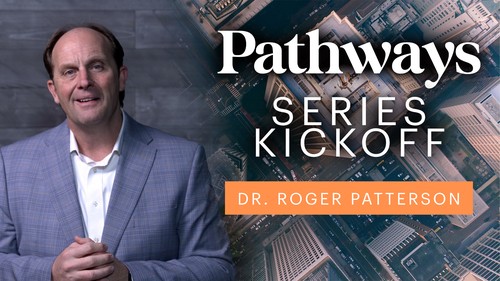
Let me start with a challenge question: What can you do today that will have impact for the next 100 years?
Today, we begin a new season of life at CItyRise called Pathways. For nearly 100 years, God has used this church to lift our city and share the hope of Jesus in Houston and around the world, building a legacy of believers who have prayed boldly, served faithfully, and trusted Him through every season. Now it is our turn to seek the Lord for how He will lead us forward.

In February of 1928, Foreign Mission Board medical missionary Nannie B. David retired to the city of West University Place. Noting that absence of a Baptist church in the community, she felt called by the Lord to start one right on her front porch. That church, our first campus and one of three total now, will be 100 years old in 2028. I do not know if Nannie knew the impact she would have.
The Lord is going to use this study to prepare our hearts for a commitment. We’re going to spend 6 weeks in 1 Chronicles 28 and 29 and during that time, I want you to pray and think and journal your best possible answers to this question:
What can you do TODAY that will have an impact for the next 100 years?
Legacy is a word we love to use—but seldom define.
Biblically, legacy is the spiritual fruit of your obedience.
In short, legacy is what your faithfulness makes possible for the next generation.
And nowhere is that clearer than in 1 Chronicles 28 and 29.
1 Chronicles 28:1-8
David assembled at Jerusalem all the officials of Israel, the officials of the tribes, the officers of the divisions that served the king, the commanders of thousands, the commanders of hundreds, the stewards of all the property and livestock of the king and his sons, together with the palace officials, the mighty men and all the seasoned warriors. 2 Then King David rose to his feet and said: “Hear me, my brothers and my people. I had it in my heart to build a house of rest for the ark of the covenant of the Lord and for the footstool of our God, and I made preparations for building. 3 But God said to me, ‘You may not build a house for my name, for you are a man of war and have shed blood.’ 4 Yet the Lord God of Israel chose me from all my father's house to be king over Israel forever. For he chose Judah as leader, and in the house of Judah my father's house, and among my father's sons he took pleasure in me to make me king over all Israel. 5 And of all my sons (for the Lord has given me many sons) he has chosen Solomon my son to sit on the throne of the kingdom of the Lord over Israel. 6 He said to me, ‘It is Solomon your son who shall build my house and my courts, for I have chosen him to be my son, and I will be his father. 7 I will establish his kingdom forever if he continues strong in keeping my commandments and my rules, as he is today.’ 8 Now therefore in the sight of all Israel, the assembly of the Lord, and in the hearing of our God, observe and seek out all the commandments of the Lord your God, that you may possess this good land and leave it for an inheritance to your children after you forever.
David is at the end of his life. His work as king is nearly finished. But instead of looking back at victories, he looks forward to the next generation—to Solomon, and to the nation God is shaping through him.
What David shows us is simple and powerful:
Legacy begins with obedience.
Let’s see how David demonstrates this.
LEGACY REQUIRES COMMUNITY AND ACCOUNTABILITY (v.1)
1 Chronicles 28:1
David assembled at Jerusalem all the officials of Israel, the officials of the tribes, the officers of the divisions that served the king, the commanders of thousands, the commanders of hundreds, the stewards of all the property and livestock of the king and his sons, together with the palace officials, the mighty men and all the seasoned warriors.
What do you see here? I see David’s Team.
On Thursday, we convened a Teams meeting to discuss how we would handle the winter storm that is upon us. And I was just thankful…I was thankful we had a gathering of staff leaders who care about me, who care about one another, and they care about you…our flock.
Leading a large flock is always better with other leaders.
David is about to lead the entire nation to take on the biggest task they have undertaken since he has become king.
So, David does not speak in private. He summons the tribal chiefs, military commanders, stewards, mighty men, and every key leader. Why?
David realizes that at this moment in history, before he goes the way of the dead, he has an opportunity. He has an opportunity to build a legacy that will shape the future…and to do that, he knows that he can’t go alone!
So, David teaches us that a Biblical Legacy is shaped in the context of:
This is a consistent biblical pattern:
Community is the soil in which legacy grows.
One of the things that I am most excited about is the potential of our community. The power of both this moment, as we prepare for our 100th birthday in just two short years, and the power of our collective “yes” is incredible!
So, If you are going to leave a legacy, know this:
Remember our big idea… Legacy begins with obedience…notice David’s words and his obedience to God. Here is our second principle about Legacy:
2. LEGACY REQUIRES A GOD-SHAPED VISION (v.2)
Slide: 1 Chronicles 28:2
Then King David rose to his feet and said: “Hear me, my brothers and my people. I had it in my heart to build a house of rest for the ark of the covenant of the Lord and for the footstool of our God, and I made preparations for building.
David rises to his feet—old, frail, but full of conviction—and shares the desire God placed in his heart.
But notice something with me:
The vision originated with God, not David.
One of David’s biggest leadership mistakes was when he took a CENSUS. And as a result of that prideful act, the Lord brought about a great punishment onto Israel. 70,000 men died and the angel of the Lord was about to strike and destroy Jerusalem, but the Lord stayed his hand.
It was here, at the THRESHING FLOOR of Ornan the Jebusite where the angel of the Lord was, that we see these words:
1 Chronicles 21:18
Now the angel of the Lord had commanded Gad to say to David that David should go up and raise an altar to the Lord on the threshing floor of Ornan the Jebusite.
And it is while he is here, that David decides to buy this plot of land from him and sacrifice to the Lord.
1 Chronicles 21:26-28
And David built there an altar to the Lord and presented burnt offerings and peace offerings and called on the Lord, and the Lord answered him with fire from heaven upon the altar of burnt offering. 27 Then the Lord commanded the angel, and he put his sword back into its sheath.
28 At that time, when David saw that the Lord had answered him at the threshing floor of Ornan the Jebusite, he sacrificed there.
And it is while David was at this plot of land that we see these words in 1 Chronicles 22:1.
1 Chronicles 22:1
Then David said, “Here shall be the house of the Lord God and here the altar of burnt offering for Israel.”
It was after he had sacrificed to the Lord that this moment, he sees! He sees that this will be the place for God’s house.
You see, David didn’t manufacture ambition. He discerned God’s heart.
This is essential:
A God-shaped legacy starts with a God-shaped vision.
Vision is not just what you want to do; it’s what God wants done through you.
What vision has God placed on your heart for:
You cannot leave a legacy if God does not shape your direction.
So, we see:
The third principle as we look at this Pathway of Legacy is this:
3. LEGACY REQUIRES TRUST IN GOD’S SOVEREIGN PLAN (vv.3–7)
1 Chronicles 28:3-7
But God said to me, ‘You may not build a house for my name, for you are a man of war and have shed blood.’ 4 Yet the Lord God of Israel chose me from all my father's house to be king over Israel forever. For he chose Judah as leader, and in the house of Judah my father's house, and among my father's sons he took pleasure in me to make me king over all Israel. 5 And of all my sons (for the Lord has given me many sons) he has chosen Solomon my son to sit on the throne of the kingdom of the Lord over Israel. 6 He said to me, ‘It is Solomon your son who shall build my house and my courts, for I have chosen him to be my son, and I will be his father. 7 I will establish his kingdom forever if he continues strong in keeping my commandments and my rules, as he is today.’
Here is the pivotal moment.
David wanted to build the temple.
God said no.
David had a dream.
God had a different assignment.
Has that ever happened to you? It wasn’t that the idea was wrong. It was how it would be carried out. So, it’s the right idea, but the wrong pathway of execution of it.
So, notice how in this legacy moment, the focus is going to move to future generations. David does this by listening to the Lord and turning his focus off of his building of the Temple to Solomon building the Temple.
You see, David trusts God’s sovereign plan.
1 Chronicles 28:6
He said to me, ‘It is Solomon your son who shall build my house and my courts, for I have chosen him to be my son, and I will be his father.
So, David steps aside.
This is the purest act of surrender.
Sometimes the greatest obedience is accepting that God will accomplish His work through someone else.
This is humility in legacy. Legacy is not a word with which you associate humility. We say, “I want a legacy…I want to be remembered for…” And that statement itself seems to be full of pride.
But humility in legacy looks down the road, sees what is possible for others, and works to make it so, believing that God is raising up another to accomplish His plan.
To leave a legacy, you must trust the sovereignty of God—especially when His plan diverges from your expectations.
So…
Lastly…as we look at the Pathway of Legacy…
4. LEGACY REQUIRES DAILY FAITHFULNESS (v.8)
1 Chronicle 28:8
Now therefore in the sight of all Israel, the assembly of the Lord, and in the hearing of our God, observe and seek out all the commandments of the Lord your God, that you may possess this good land and leave it for an inheritance to your children after you forever.
Here is David’s conclusion.
Not: “Build great things.”
Not: “Leave monuments.”
But simply:
Walk with God. Obey Him. Daily. Faithfully.
You see, the greatest inheritance you give the next generation is not a building, a bank account, or a business.
It is your obedience -- Your faithfulness plants seeds that will outlive you.
Legacy is not something you leave someday. It is something you build today—one act of obedience at a time.
So…
Remember…LEGACY IS AN ACT OF OBEDIENCE
David’s message is simple:
If you want to leave a legacy that matters, obey God today.
The people who leave the greatest legacies are not the most talented or the most successful — they are the most obedient.
Because legacy doesn’t begin with achievement.
It begins with obedience.
Application Questions from the Listening Guide:
APPLICATION / REFLECTION
A. Community & Accountability
Who are the people God has placed around me to strengthen my obedience?
B. God-Shaped Vision
Where is God stirring a desire that I need to bring before Him for direction?
C. Trusting God’s Sovereign Plan
Is there a place where God is saying “not you” or “not now,” and I need to surrender?
D. Daily Faithfulness
What one act of obedience will I commit to practicing this week?
This blog is based on the message shared by Senior Pastor Dr. Roger Patterson on Sunday, Jan. 25, 2026. Check out the full message below!
Today, we begin a new season of life at CItyRise called Pathways. For nearly 100 years, God has used this church to lift our city and share the hope of Jesus in Houston and around the world, building a legacy of believers who have prayed boldly, served faithfully, and trusted Him through every season. Now it is our turn to seek the Lord for how He will lead us forward.
In February of 1928, Foreign Mission Board medical missionary Nannie B. David retired to the city of West University Place. Noting that absence of a Baptist church in the community, she felt called by the Lord to start one right on her front porch. That church, our first campus and one of three total now, will be 100 years old in 2028. I do not know if Nannie knew the impact she would have.
- I don’t know if she knew we would literally give $100s of thousands of dollars a year to missions.
- I don’t know if she knew we would send as many as 350 people a year into the international mission field on mission trips
- or have three campuses
- or over 1600 a people in worship.
- But she chose to plant the seeds of a legacy that is now almost 100 years old, going strong and we are all standing on her shoulders today. You and I are here today because of the faithfulness of Nannie B. David.
The Lord is going to use this study to prepare our hearts for a commitment. We’re going to spend 6 weeks in 1 Chronicles 28 and 29 and during that time, I want you to pray and think and journal your best possible answers to this question:
What can you do TODAY that will have an impact for the next 100 years?
Legacy is a word we love to use—but seldom define.
- A legacy is not the stories people tell about you when you’re gone.
It’s not the plaques on the wall or the accomplishments on your résumé.
Biblically, legacy is the spiritual fruit of your obedience.
In short, legacy is what your faithfulness makes possible for the next generation.
And nowhere is that clearer than in 1 Chronicles 28 and 29.
1 Chronicles 28:1-8
David assembled at Jerusalem all the officials of Israel, the officials of the tribes, the officers of the divisions that served the king, the commanders of thousands, the commanders of hundreds, the stewards of all the property and livestock of the king and his sons, together with the palace officials, the mighty men and all the seasoned warriors. 2 Then King David rose to his feet and said: “Hear me, my brothers and my people. I had it in my heart to build a house of rest for the ark of the covenant of the Lord and for the footstool of our God, and I made preparations for building. 3 But God said to me, ‘You may not build a house for my name, for you are a man of war and have shed blood.’ 4 Yet the Lord God of Israel chose me from all my father's house to be king over Israel forever. For he chose Judah as leader, and in the house of Judah my father's house, and among my father's sons he took pleasure in me to make me king over all Israel. 5 And of all my sons (for the Lord has given me many sons) he has chosen Solomon my son to sit on the throne of the kingdom of the Lord over Israel. 6 He said to me, ‘It is Solomon your son who shall build my house and my courts, for I have chosen him to be my son, and I will be his father. 7 I will establish his kingdom forever if he continues strong in keeping my commandments and my rules, as he is today.’ 8 Now therefore in the sight of all Israel, the assembly of the Lord, and in the hearing of our God, observe and seek out all the commandments of the Lord your God, that you may possess this good land and leave it for an inheritance to your children after you forever.
David is at the end of his life. His work as king is nearly finished. But instead of looking back at victories, he looks forward to the next generation—to Solomon, and to the nation God is shaping through him.
What David shows us is simple and powerful:
Legacy begins with obedience.
Let’s see how David demonstrates this.
LEGACY REQUIRES COMMUNITY AND ACCOUNTABILITY (v.1)
1 Chronicles 28:1
David assembled at Jerusalem all the officials of Israel, the officials of the tribes, the officers of the divisions that served the king, the commanders of thousands, the commanders of hundreds, the stewards of all the property and livestock of the king and his sons, together with the palace officials, the mighty men and all the seasoned warriors.
What do you see here? I see David’s Team.
On Thursday, we convened a Teams meeting to discuss how we would handle the winter storm that is upon us. And I was just thankful…I was thankful we had a gathering of staff leaders who care about me, who care about one another, and they care about you…our flock.
Leading a large flock is always better with other leaders.
David is about to lead the entire nation to take on the biggest task they have undertaken since he has become king.
So, David does not speak in private. He summons the tribal chiefs, military commanders, stewards, mighty men, and every key leader. Why?
- Because he cares.
- He cares about his nation.
- He cares about his team. He cares about their future.
David realizes that at this moment in history, before he goes the way of the dead, he has an opportunity. He has an opportunity to build a legacy that will shape the future…and to do that, he knows that he can’t go alone!
So, David teaches us that a Biblical Legacy is shaped in the context of:
- community,
- accountability,
- and shared commitment.
This is a consistent biblical pattern:
- Moses gathered the elders before handing leadership to Joshua (Deut. 31:28).
- Joshua gathered the tribes at Shechem before renewing the covenant (Josh. 24:1).
- Paul gathered the Ephesian elders for a final charge (Acts 20:17–38).
Community is the soil in which legacy grows.
One of the things that I am most excited about is the potential of our community. The power of both this moment, as we prepare for our 100th birthday in just two short years, and the power of our collective “yes” is incredible!
So, If you are going to leave a legacy, know this:
- Legacy grows best in spiritual community.
- Legacy is strengthened through accountability with godly people.
- God uses the people we gather to shape the future we leave.
Remember our big idea… Legacy begins with obedience…notice David’s words and his obedience to God. Here is our second principle about Legacy:
2. LEGACY REQUIRES A GOD-SHAPED VISION (v.2)
Slide: 1 Chronicles 28:2
Then King David rose to his feet and said: “Hear me, my brothers and my people. I had it in my heart to build a house of rest for the ark of the covenant of the Lord and for the footstool of our God, and I made preparations for building.
David rises to his feet—old, frail, but full of conviction—and shares the desire God placed in his heart.
But notice something with me:
The vision originated with God, not David.
One of David’s biggest leadership mistakes was when he took a CENSUS. And as a result of that prideful act, the Lord brought about a great punishment onto Israel. 70,000 men died and the angel of the Lord was about to strike and destroy Jerusalem, but the Lord stayed his hand.
It was here, at the THRESHING FLOOR of Ornan the Jebusite where the angel of the Lord was, that we see these words:
1 Chronicles 21:18
Now the angel of the Lord had commanded Gad to say to David that David should go up and raise an altar to the Lord on the threshing floor of Ornan the Jebusite.
And it is while he is here, that David decides to buy this plot of land from him and sacrifice to the Lord.
1 Chronicles 21:26-28
And David built there an altar to the Lord and presented burnt offerings and peace offerings and called on the Lord, and the Lord answered him with fire from heaven upon the altar of burnt offering. 27 Then the Lord commanded the angel, and he put his sword back into its sheath.
28 At that time, when David saw that the Lord had answered him at the threshing floor of Ornan the Jebusite, he sacrificed there.
And it is while David was at this plot of land that we see these words in 1 Chronicles 22:1.
1 Chronicles 22:1
Then David said, “Here shall be the house of the Lord God and here the altar of burnt offering for Israel.”
It was after he had sacrificed to the Lord that this moment, he sees! He sees that this will be the place for God’s house.
You see, David didn’t manufacture ambition. He discerned God’s heart.
This is essential:
A God-shaped legacy starts with a God-shaped vision.
Vision is not just what you want to do; it’s what God wants done through you.
What vision has God placed on your heart for:
- your family?
- your ministry?
- your giving?
- your next season of life?
You cannot leave a legacy if God does not shape your direction.
So, we see:
- Vision begins with a God-initiated desire, not personal ambition.
- A God-shaped vision aligns with God’s character, purposes, and timing.
- Legacy leaders discern what God wants done—not what they want to do.
The third principle as we look at this Pathway of Legacy is this:
3. LEGACY REQUIRES TRUST IN GOD’S SOVEREIGN PLAN (vv.3–7)
1 Chronicles 28:3-7
But God said to me, ‘You may not build a house for my name, for you are a man of war and have shed blood.’ 4 Yet the Lord God of Israel chose me from all my father's house to be king over Israel forever. For he chose Judah as leader, and in the house of Judah my father's house, and among my father's sons he took pleasure in me to make me king over all Israel. 5 And of all my sons (for the Lord has given me many sons) he has chosen Solomon my son to sit on the throne of the kingdom of the Lord over Israel. 6 He said to me, ‘It is Solomon your son who shall build my house and my courts, for I have chosen him to be my son, and I will be his father. 7 I will establish his kingdom forever if he continues strong in keeping my commandments and my rules, as he is today.’
Here is the pivotal moment.
David wanted to build the temple.
God said no.
David had a dream.
God had a different assignment.
Has that ever happened to you? It wasn’t that the idea was wrong. It was how it would be carried out. So, it’s the right idea, but the wrong pathway of execution of it.
So, notice how in this legacy moment, the focus is going to move to future generations. David does this by listening to the Lord and turning his focus off of his building of the Temple to Solomon building the Temple.
You see, David trusts God’s sovereign plan.
1 Chronicles 28:6
He said to me, ‘It is Solomon your son who shall build my house and my courts, for I have chosen him to be my son, and I will be his father.
So, David steps aside.
- He empowers Solomon.
He prepares materials.
He supplies the blueprints.
He strengthens the next generation.
This is the purest act of surrender.
Sometimes the greatest obedience is accepting that God will accomplish His work through someone else.
This is humility in legacy. Legacy is not a word with which you associate humility. We say, “I want a legacy…I want to be remembered for…” And that statement itself seems to be full of pride.
But humility in legacy looks down the road, sees what is possible for others, and works to make it so, believing that God is raising up another to accomplish His plan.
To leave a legacy, you must trust the sovereignty of God—especially when His plan diverges from your expectations.
So…
- Sometimes obedience means accepting a “no” from God.
- And Trusting God’s sovereignty means believing His plan is always better, even when it’s different.
- Legacy humility: being faithful when someone else gets to finish what you started.
- And what we are going to see is that God establishes Solomon—not David—because the story is about God’s glory, not one leader’s accomplishments.
Lastly…as we look at the Pathway of Legacy…
4. LEGACY REQUIRES DAILY FAITHFULNESS (v.8)
1 Chronicle 28:8
Now therefore in the sight of all Israel, the assembly of the Lord, and in the hearing of our God, observe and seek out all the commandments of the Lord your God, that you may possess this good land and leave it for an inheritance to your children after you forever.
Here is David’s conclusion.
Not: “Build great things.”
Not: “Leave monuments.”
But simply:
Walk with God. Obey Him. Daily. Faithfully.
You see, the greatest inheritance you give the next generation is not a building, a bank account, or a business.
It is your obedience -- Your faithfulness plants seeds that will outlive you.
- “One generation shall commend your works to another” (Ps. 145:4).
- “Teach them diligently to your children…” (Deut. 6:4–9).
- “What you have heard from me… entrust to faithful men” (2 Tim. 2:2).
Legacy is not something you leave someday. It is something you build today—one act of obedience at a time.
- When you pray with your kids
- When you read Scripture daily
- When you give sacrificially
- When you serve faithfully
- When you forgive
- When you trust God in suffering
- When you keep your word
You are laying stones in the foundation of your legacy.
So…
- Daily obedience builds tomorrow’s legacy. You see…Faithfulness in small things becomes fruitfulness in future generations. And this Legacy isn’t built in a moment; it’s built in a lifetime of moments.
Remember…LEGACY IS AN ACT OF OBEDIENCE
David’s message is simple:
If you want to leave a legacy that matters, obey God today.
- Build community and accountability.
- Seek a God-shaped vision.
- Trust God’s sovereign plan.
- Walk faithfully, day after day.
The people who leave the greatest legacies are not the most talented or the most successful — they are the most obedient.
Because legacy doesn’t begin with achievement.
It begins with obedience.
Application Questions from the Listening Guide:
APPLICATION / REFLECTION
A. Community & Accountability
Who are the people God has placed around me to strengthen my obedience?
B. God-Shaped Vision
Where is God stirring a desire that I need to bring before Him for direction?
C. Trusting God’s Sovereign Plan
Is there a place where God is saying “not you” or “not now,” and I need to surrender?
D. Daily Faithfulness
What one act of obedience will I commit to practicing this week?
This blog is based on the message shared by Senior Pastor Dr. Roger Patterson on Sunday, Jan. 25, 2026. Check out the full message below!
Posted in Manuscript, Pathways
Posted in houston, CityRise Church, Dr. Roger Patterson, Pathways, 1 Chronicles
Posted in houston, CityRise Church, Dr. Roger Patterson, Pathways, 1 Chronicles
Recent
Archive
2026
January
40 Days of Faith: Day 1A Note from Pastor Roger40 Days of Faith: Day 2Three Ways Satan Tries to Attack You40 Days of Faith: Day 340 Days of Faith: Day 440 Days of Faith: Day 5Because You Give: Year in ReviewFaith That Offers Its Best: Lessons From Cain and Abel40 Days of Faith: Day 640 Days of Faith: Day 740 Days of Faith: Day 8God-Sized DreamsA Note from Pastor Roger40 Days of Faith: Day 940 Days of Faith: Day 1040 Days of Faith: Day 11Because You Give: Christmas Eve Recap40 Days of Faith: Day 12Walking With God: The Life and Legacy of Enoch40 Days of Faith: Day 13Pathways Create: West U Baptist Children's RenovationPathways Create: Missouri City Parking LotPathways Create: CityRise BellairePathways Create: West U Baptist PlaygroundsPathways Create: West U Baptist GalleryPathways Create: Missouri City Building RenovationPathways Create: West U Baptist SanctuaryPathways Create: West U Baptist Choir SuitePathways Create: West U Baptist Teaching TheaterPathways Create: West U Baptist Fowler ChapelPathways Create: West U Baptist Access Ramp and Front PlaygroundPathways Extend: Neighbors & NationsPathways Honor: Centennial Gift40 Days of Faith: Day 14Firstfruits GivingHow to Walk in Faith40 Days of Faith: Day 15Standing on Their ShouldersA Note from Pastor RogerPaying it Forward40 Days of Faith: Day 1640 Days of Faith: Day 1740 Days of Faith: Day 18Because You Give: Discipleship UThe Heart Behind GivingCommunity and GenerosityTest Me in ThisMultiplying GenerosityInvesting in What is Next40 Days of Faith: Day 19The Power of a Meal40 Days of Faith: Day 2040 Days of Faith: Day 21A Note from Pastor RogerHow to Have Faith That is Certain40 Days of Faith: Day 2240 Days of Faith: Day 23January 25 Services: Online Only & Pathways Kicks Off40 Days of Faith: Day 24How to Watch CityRise Online This MorningBecause You Give: Kids Ministry40 Days of Faith: Day 25The Pathway of Legacy40 Days of Faith: Day 2640 Days of Faith: Day 2740 Days of Faith: Day 28A Note from Pastor Roger40 Days of Faith: Day 2940 Days of Faith: Day 3040 Days of Faith: Day 31
February
40 Days of Faith: Day 3240 Days of Faith: Day 33The Pathway of Planning40 Days of Faith: Day 3440 Days of Faith: Day 35The Right Way to PlanA Note from Pastor Roger40 Days of Faith: Day 3640 Days of Faith: Day 3740 Days of Faith: Day 38Because You Give: Kenya Mission Trip40 Days of Faith: Day 3940 Days of Faith: Day 40A Note from Pastor RogerHow to Move From Planning to ActionBecause You Give: Student MinistryThe Pathway of Authentic LeadershipA Note from Pastor RogerBecause You Give: Women's RetreatThe Pathway of Joyful WorshipHow to Be Guided by GodA Note from Pastor Roger
No Comments