
The Tale of Two Mothers
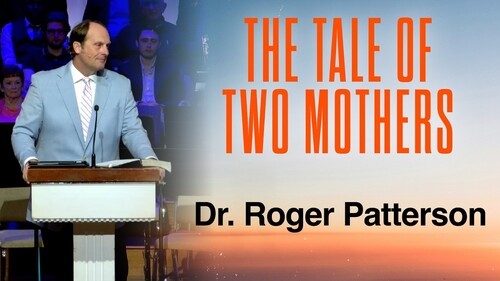
Happy Mother’s Day, CityRise Church.
Before we open the text today, I want to pause and say something with deep gratitude. We would not be the church we are without the mothers, grandmothers, spiritual mothers, foster mothers, adoptive mothers, single mothers, and women of faith who have shaped so many of us.
Some of you got children dressed this morning, found shoes that were somehow missing, packed bags, broke up arguments in the car, and still made it to church with a smile on your face. Some of you are still mothering grown children through prayer, counsel, encouragement, and quiet tears. Some of you are carrying joy today. Some of you are carrying grief. Some of you are celebrating. Some of you are aching.
And I want you to know this: God sees you. Your church loves you. And the work you are doing matters for eternity.
Now, Mother’s Day can also be dangerous territory for husbands and children if we are not careful. I read about some of the worst Mother’s Day gifts people have ever given: cleaning supplies, dieting books, vacuum cleaners, leftover holiday candy, and gas station flowers. But my favorite was the man who gave his wife an iron for Mother’s Day. He got the message a month later when she gave him an ironing board for Father’s Day.
Fellas, if you have anything in a gift bag today that plugs into the wall and removes wrinkles, you may want to reconsider before lunch.
But today, as we come to Galatians 4, Paul actually gives us what we might call a Mother’s Day message. Not a sentimental one. Not a Hallmark one. But a deeply theological one.
Paul takes us back to Genesis, and he tells us the story of two mothers.
Hagar and Sarah.
Two women. Two sons. Two covenants. Two mountains. Two cities. Two spiritual realities. And ultimately, two completely different ways to relate to God.
One way leads to slavery.
The other leads to freedom.
And the whole passage builds toward Galatians 5:1.
Galatians 5:1
For freedom Christ has set us free; stand firm therefore, and do not submit again to a yoke of slavery.
Church, that verse is not merely a theological statement. It is an invitation. It is a warning. It is a summons.
Christ has set you free.
Stand firm.
Do not go back.
Let’s read Galatians 4:21–31.
Galatians 4:21–31
Tell me, you who desire to be under the law, do you not listen to the law? 22 For it is written that Abraham had two sons, one by a slave woman and one by a free woman. 23 But the son of the slave was born according to the flesh, while the son of the free woman was born through promise. 24 Now this may be interpreted allegorically: these women are two covenants. One is from Mount Sinai, bearing children for slavery; she is Hagar. 25 Now Hagar is Mount Sinai in Arabia;[e] she corresponds to the present Jerusalem, for she is in slavery with her children. 26 But the Jerusalem above is free, and she is our mother. 27 For it is written,
“Rejoice, O barren one who does not bear;
break forth and cry aloud, you who are not in labor!
For the children of the desolate one will be more
than those of the one who has a husband.”
28 Now you, brothers, like Isaac, are children of promise. 29 But just as at that time he who was born according to the flesh persecuted him who was born according to the Spirit, so also it is now. 30 But what does the Scripture say? “Cast out the slave woman and her son, for the son of the slave woman shall not inherit with the son of the free woman.” 31 So, brothers, we are not children of the slave but of the free woman.
Before we jump into Galatians 4:21, it is important to remember where Paul has taken us through this letter.
Paul sees this as nothing less than a distortion of the gospel itself. And so, through the first four chapters, he has been patiently and passionately building his case.
What Has Paul Been Teaching in Galatians 1–4?
• The Gospel comes from divine revelation, not human invention (Galatians 1)
• Salvation is by grace through faith in Christ alone — not by works of the law (Galatians 2)
• Abraham himself was justified by faith before the law was ever given (Galatians 3)
• The Law was never meant to save; it was a guardian pointing us to Christ (Galatians 3)
• In Christ, believers are adopted as sons and daughters of God (Galatians 4)
• To return to law-based righteousness after receiving grace is to return to slavery (Galatians 4)
Paul has been moving toward one central burden all along:
And therefore our standing before God rests not on our ability to perform, but on Jesus’ finished work on our behalf.
Now, as we come to the end of chapter 4, Paul reaches back into the story of Abraham, Sarah, and Hagar to illustrate the difference between:
Let’s dive right in. Here we have…Two mothers and a question:
Two Mothers: Which House Are You Living In?
Paul begins with a confrontation.
Galatians 4:21
Tell me, you who desire to be under the law, do you not listen to the law?
That is a sharp question. Paul is saying:
“You say you want to live under the law. You say you want to take on this system of religious performance. But have you actually listened to what the law says?”
Then he takes them all the way back to Abraham.
Abraham had two sons. One was Ishmael, born to Hagar. The other was Isaac, born to Sarah.
Now, to really understand what Paul is doing, we need to slow down and go back into the Genesis story.
That promise was never merely about Abraham having a better life. It was about the plan of redemption.
So, when God promised Abraham a son, this was not merely about Abraham and Sarah becoming parents in old age. This was about the unfolding promise of God to rescue the nations.
But there was a problem…Sarah was barren.
And not only was Sarah barren, but year after year went by and the promise seemed more impossible.
Have you ever been there?
That is where Abraham and Sarah were.
And in that long waiting, they did what we are often tempted to do.
They tried to help God out. - Sarah gave Hagar, her Egyptian servant, to Abraham. Hagar conceived, and Ishmael was born.
But Paul says Ishmael was “born according to the flesh.”
Now, that does not mean Ishmael was not a real child, or that God did not care about him.
Paul’s point is that Ishmael came through human effort, human strategy, human impatience, and human control.
Hagar became the human solution to a divine promise.
But Isaac…Isaac came differently.
That is the contrast Paul is drawing.
And Paul is saying to the Galatians…
“If you want to understand what is happening in your own soul, go back and look at these two mothers.”
Because every person in this room will relate to God in one of two ways.
The other way is the way of promise.
The performance way says,
“I must do better so God will accept me.”
The promise way says,
“In Christ, I am accepted, and now grace is changing me.”
Those two statements may sound similar, but they produce very different lives.
The performance way produces:
But the promise way produces a different life.
And this is where many believers struggle. We know how to say salvation is by grace, but we often live as though God’s daily posture toward us is determined by our latest performance.
But if we failed, if we sinned, if we were impatient, if we were inconsistent, we pull back from God as if the Father’s love rises and falls with our record.
That is not freedom. That is slavery dressed in religious language.
Paul is pressing this because the false teachers in Galatia were telling Gentile believers that faith in Jesus was not enough.
And Paul says,
“No. If you add anything to Christ as the basis of your acceptance before God, you have not strengthened the gospel. You have lost it.”
This is why the story of Hagar and Sarah matters.
Friends, walking in faith is not Abraham and Sarah figuring out how to make God’s promise happen.
Walking in faith is God doing what only God can do.
And on this Mother’s Day, there is a tender word here for parents, and especially for mothers who are carrying heavy burdens for their children.
You wonder whether you were too strict or not strict enough, too protective or not protective enough. And the enemy loves to come in and accuse.
Now, parents, we do have responsibility. We teach. We train. We model.
But hear me carefully: you cannot perform your child into the kingdom.
Monica, the mother of Augustine, understood this. Her son was brilliant, gifted, restless, and running from God. He chased ambition, pleasure, false religion, and worldly philosophy. Monica did not have the power to convert him.
And eventually Augustine was converted and became one of the most influential theologians in the history of the church.
Augustine later wrote that his mother had labored more for his spiritual birth than she had for his physical birth.
That is a picture of promise.
Promise does not mean passivity. It does not mean we do nothing. It means we do not confuse our role with God’s role.
We pray. We love. We speak. We wait. We trust.
And we remember that the same God who opened Sarah’s barren womb can open a prodigal’s hardened heart.
So, Paul begins with two mothers. But then he moves from mothers to mountains. He wants the Galatians to see that these two mothers represent two covenants, two spiritual systems, and two ways of standing before God.
Two Covenants: Which Mountain Are You Living Under?
Look again at verses 24-26.
Galatians 4:24–26
Now this may be interpreted allegorically: these women are two covenants. One is from Mount Sinai, bearing children for slavery; she is Hagar. 25 Now Hagar is Mount Sinai in Arabia; she corresponds to the present Jerusalem, for she is in slavery with her children. 26 But the Jerusalem above is free, and she is our mother.
Paul says these women are two covenants.
Now, when Paul uses the word “allegorically,” he does not mean that Genesis did not actually happen. He is not denying the historical reality of Hagar, Sarah, Ishmael, and Isaac.
He is saying that the historical events themselves point beyond themselves.
And Paul says Hagar corresponds to Mount Sinai.
That would have been shocking to his Jewish readers.
Mount Sinai was sacred ground in Israel’s history.
That is where:
If you go back to Exodus 19, the scene is terrifying.
Now, we need to be very careful here. Paul is not saying the law was evil. The law was holy, revealed God’s character, and exposed sin. The law gave Israel a moral, ceremonial, and civic structure as God’s covenant people.
But the law could not give life.
And that is the point.
The law could:
And because of that, any system of religion built on law-keeping as the basis of acceptance before God will eventually crush people under its weight.
That is why Paul says Sinai bears children for slavery.
And some of you know exactly what that feels like.
You believe in grace doctrinally, but emotionally you still live under law.
And that produces a particular kind of spiritual fatigue… A fatigue full of:
It creates people who may know the right answers but cannot rest in the finished work of Jesus. That is Sinai.
And Paul says, “You do not belong there anymore.”
But then he says there is another city.
Galatians 4:26
But the Jerusalem above is free, and she is our mother.
The Jerusalem above is not the earthly city of Jerusalem. Paul is lifting our eyes to the heavenly reality, the eternal city, the city whose builder and maker is God.
Hebrews 12 helps us here.
Hebrews 12:18–24
18 For you have not come to what may be touched, a blazing fire and darkness and gloom and a tempest 19 and the sound of a trumpet and a voice whose words made the hearers beg that no further messages be spoken to them. 20 For they could not endure the order that was given, “If even a beast touches the mountain, it shall be stoned.” 21 Indeed, so terrifying was the sight that Moses said, “I tremble with fear.” 22 But you have come to Mount Zion and to the city of the living God, the heavenly Jerusalem, and to innumerable angels in festal gathering, 23 and to the assembly of the firstborn who are enrolled in heaven, and to God, the judge of all, and to the spirits of the righteous made perfect, 24 and to Jesus, the mediator of a new covenant, and to the sprinkled blood that speaks a better word than the blood of Abel.
Hebrews says that in Christ, we have not ultimately come to Sinai, the mountain of terror. We have come to Mount Zion, the heavenly Jerusalem, and to Jesus, the mediator of a new covenant.
That is what Paul is saying in Galatians.
There is a covenant that stands outside of you and says, “Obey and live.”
But there is a new covenant in which God says, “I will change your heart.”
Jeremiah prophesied this long before Paul wrote Galatians.
Jeremiah 31:31-34
“Behold, the days are coming, declares the Lord, when I will make a new covenant with the house of Israel and the house of Judah, 32 not like the covenant that I made with their fathers on the day when I took them by the hand to bring them out of the land of Egypt, my covenant that they broke, though I was their husband, declares the Lord. 33 For this is the covenant that I will make with the house of Israel after those days, declares the Lord: I will put my law within them, and I will write it on their hearts. And I will be their God, and they shall be my people. 34 And no longer shall each one teach his neighbor and each his brother, saying, ‘Know the Lord,’ for they shall all know me, from the least of them to the greatest, declares the Lord. For I will forgive their iniquity, and I will remember their sin no more.”
Notice how much of the new covenant depends on God’s “I will.”
God says:
That is promise language.
And this is where we must see Christ clearly.
Jesus is not merely the teacher of the new covenant. He is:
That is what Paul already told us in Galatians 3.
Galatians 3:13–14
Christ redeemed us from the curse of the law by becoming a curse for us… so that in Christ Jesus the blessing of Abraham might come to the Gentiles.
So, when Paul says the Jerusalem above is free, he is not talking about vague spiritual optimism. He is talking about a freedom purchased by the blood of Jesus Christ.
And Christ poured out the Spirit so that the life of God would be written not merely before us, but within us.
This is why Paul quotes Isaiah 54 in verse 27.
Galatians 4:27
For it is written,
“Rejoice, O barren one who does not bear;
break forth and cry aloud, you who are not in labor!
For the children of the desolate one will be more
than those of the one who has a husband.”
Why can the barren rejoice?
Why can the desolate sing?
Why can sinners come near?
And I want to be tender here, especially on Mother’s Day.
For some of you, the word “barren” is not theoretical. It is painful.
This text does not minimize that pain. It does not offer simplistic answers. But it does speak a better word over barren places.
Human striving may produce activity, but only grace produces life.
So, here Paul has shown us two mothers and two covenants. Now he brings us to the point of decision. If Christ has set us free, then we must not allow slavery to remain in the house.
One Choice: Cast it Out and Stand Firm
Look at verse 28.
Galatians 4:28
Now you, brothers, like Isaac, are children of promise.
Paul is not merely telling them what to do. He is reminding them who they are.
That is so important.
The Christian life does not begin with behavior modification. It begins with identity transformation.
Paul says, “You are like Isaac.”
You are children of promise because God has done for you in Christ what you could never do for yourself.
But then Paul says something very honest.
Galatians 4:29
But just as at that time he who was born according to the flesh persecuted him who was born according to the Spirit, so also it is now.
In Genesis, Ishmael mocked Isaac. The child born according to the flesh opposed the child born according to promise.
Paul says that same pattern continues.
Just as the flesh always resists the Spirit, performance always resists grace.
And sometimes the strongest resistance to grace comes from religious people who cannot stand the idea that Jesus really is enough.
But let’s be honest. The resistance is not only outside of us. It is also inside of us.
There is something in the human heart that keeps wanting to contribute to our own salvation.
Grace offends the pride of the human heart because grace removes boasting.
And that brings Paul to the sharp command in verse 30.
Galatians 4:30
But what does the Scripture say? “Cast out the slave woman and her son, for the son of the slave woman shall not inherit with the son of the free woman.”
That sounds severe because Paul intends it to sound severe.
He is quoting Genesis 21, when Sarah sees Ishmael mocking Isaac and says to Abraham, “Cast out this slave woman with her son.”
Now, in the Genesis narrative, that is a painful family moment.
But Paul is drawing out the theological meaning. He is saying that law-based righteousness and promise-based righteousness cannot coexist as the foundation of your standing before God.
So, Paul says, “Cast it out.”
Whatever system tells you that your standing before God depends on your performance must be cast out.
Whatever pride tells you that your obedience makes you superior to others must be cast out.
Not because obedience does not matter. It does matter.
Grace is not opposed to obedience.
Grace is opposed to earning.
You see, Paul is calling the Galatians to a decisive break with any version of Christianity that makes Jesus a partial Savior.
And that brings us to verse 31 and then Galatians 5:1.
Galatians 4:31
So, brothers, we are not children of the slave but of the free woman.
I love verse 31 here. It’s a declaration of whose we are! It’s our identity. And once again, from our identity, there is a call to Action.
That call to action is to stand firm.
Look at Galatians 5:1. This is one of the great sentences in the New Testament.
Galatians 5:1
For freedom Christ has set us free; stand firm therefore, and do not submit again to a yoke of slavery.
“For freedom…”
That is the purpose.
Christ did not set you free so you could live the rest of your life afraid of God’s rejection. He did not break the chains of condemnation so you could polish them and put them back on.
“Christ has set us free…”
That is the agent. Not you…but Christ! His blood purchased your freedom. His cross secured it. His resurrection confirmed it. His Spirit applies it.
“Stand firm therefore…”
That is the command. The Christian life requires resistance. There are moments when you have to plant your feet on the finished work of Jesus and refuse to move.
And then Paul gives the warning:
“Do not submit again to a yoke of slavery.”
That word “again” is important. These Galatians had already tasted grace.
And now they were being tempted to go back.
So let me ask you:
Is there a yoke you have been carrying that Christ never asked you to pick up?
Paul says, “Stand firm.”
Not because you are strong in yourself.
Stand firm because Christ has set you free.
This blog is based on the message shared by Senior Pastor Dr. Roger Patterson on Sunday, May 10, 2026, at our CityRise West U Baptist campus. Check out the full message below!
Before we open the text today, I want to pause and say something with deep gratitude. We would not be the church we are without the mothers, grandmothers, spiritual mothers, foster mothers, adoptive mothers, single mothers, and women of faith who have shaped so many of us.
Some of you got children dressed this morning, found shoes that were somehow missing, packed bags, broke up arguments in the car, and still made it to church with a smile on your face. Some of you are still mothering grown children through prayer, counsel, encouragement, and quiet tears. Some of you are carrying joy today. Some of you are carrying grief. Some of you are celebrating. Some of you are aching.
And I want you to know this: God sees you. Your church loves you. And the work you are doing matters for eternity.
Now, Mother’s Day can also be dangerous territory for husbands and children if we are not careful. I read about some of the worst Mother’s Day gifts people have ever given: cleaning supplies, dieting books, vacuum cleaners, leftover holiday candy, and gas station flowers. But my favorite was the man who gave his wife an iron for Mother’s Day. He got the message a month later when she gave him an ironing board for Father’s Day.
Fellas, if you have anything in a gift bag today that plugs into the wall and removes wrinkles, you may want to reconsider before lunch.
But today, as we come to Galatians 4, Paul actually gives us what we might call a Mother’s Day message. Not a sentimental one. Not a Hallmark one. But a deeply theological one.
Paul takes us back to Genesis, and he tells us the story of two mothers.
Hagar and Sarah.
Two women. Two sons. Two covenants. Two mountains. Two cities. Two spiritual realities. And ultimately, two completely different ways to relate to God.
One way leads to slavery.
The other leads to freedom.
And the whole passage builds toward Galatians 5:1.
Galatians 5:1
For freedom Christ has set us free; stand firm therefore, and do not submit again to a yoke of slavery.
Church, that verse is not merely a theological statement. It is an invitation. It is a warning. It is a summons.
Christ has set you free.
Stand firm.
Do not go back.
Let’s read Galatians 4:21–31.
Galatians 4:21–31
Tell me, you who desire to be under the law, do you not listen to the law? 22 For it is written that Abraham had two sons, one by a slave woman and one by a free woman. 23 But the son of the slave was born according to the flesh, while the son of the free woman was born through promise. 24 Now this may be interpreted allegorically: these women are two covenants. One is from Mount Sinai, bearing children for slavery; she is Hagar. 25 Now Hagar is Mount Sinai in Arabia;[e] she corresponds to the present Jerusalem, for she is in slavery with her children. 26 But the Jerusalem above is free, and she is our mother. 27 For it is written,
“Rejoice, O barren one who does not bear;
break forth and cry aloud, you who are not in labor!
For the children of the desolate one will be more
than those of the one who has a husband.”
28 Now you, brothers, like Isaac, are children of promise. 29 But just as at that time he who was born according to the flesh persecuted him who was born according to the Spirit, so also it is now. 30 But what does the Scripture say? “Cast out the slave woman and her son, for the son of the slave woman shall not inherit with the son of the free woman.” 31 So, brothers, we are not children of the slave but of the free woman.
Before we jump into Galatians 4:21, it is important to remember where Paul has taken us through this letter.
- Galatians is not merely a theological debate; it is a pastoral rescue mission.
- False teachers had entered the churches and were telling Gentile believers that faith in Jesus was not enough.
- They needed Christ, yes — but they also needed circumcision, the Mosaic Law, and Jewish religious practices in order to truly belong to the people of God.
Paul sees this as nothing less than a distortion of the gospel itself. And so, through the first four chapters, he has been patiently and passionately building his case.
What Has Paul Been Teaching in Galatians 1–4?
• The Gospel comes from divine revelation, not human invention (Galatians 1)
• Salvation is by grace through faith in Christ alone — not by works of the law (Galatians 2)
• Abraham himself was justified by faith before the law was ever given (Galatians 3)
• The Law was never meant to save; it was a guardian pointing us to Christ (Galatians 3)
• In Christ, believers are adopted as sons and daughters of God (Galatians 4)
• To return to law-based righteousness after receiving grace is to return to slavery (Galatians 4)
Paul has been moving toward one central burden all along:
- if righteousness could come through human effort, then Christ died for no purpose.
- But Christ did die.
- Christ was crucified.
- Christ was raised.
And therefore our standing before God rests not on our ability to perform, but on Jesus’ finished work on our behalf.
Now, as we come to the end of chapter 4, Paul reaches back into the story of Abraham, Sarah, and Hagar to illustrate the difference between:
- slavery and freedom,
- flesh and promise,
- law and grace.
Let’s dive right in. Here we have…Two mothers and a question:
Two Mothers: Which House Are You Living In?
Paul begins with a confrontation.
Galatians 4:21
Tell me, you who desire to be under the law, do you not listen to the law?
That is a sharp question. Paul is saying:
“You say you want to live under the law. You say you want to take on this system of religious performance. But have you actually listened to what the law says?”
Then he takes them all the way back to Abraham.
Abraham had two sons. One was Ishmael, born to Hagar. The other was Isaac, born to Sarah.
Now, to really understand what Paul is doing, we need to slow down and go back into the Genesis story.
- God had called Abram out of Ur of the Chaldeans and made him a promise.
- God told him that He would make him into a great nation,
- and that He would bless him,
- and that through him all the families of the earth would be blessed.
That promise was never merely about Abraham having a better life. It was about the plan of redemption.
- Through Abraham would come Isaac.
- Through Isaac would come Jacob.
- Through Jacob would come the tribes of Israel.
- Through Judah would come David.
- And through David’s line would come Jesus Christ, the Son of God, the Savior of the world.
So, when God promised Abraham a son, this was not merely about Abraham and Sarah becoming parents in old age. This was about the unfolding promise of God to rescue the nations.
But there was a problem…Sarah was barren.
And not only was Sarah barren, but year after year went by and the promise seemed more impossible.
- Abraham got older.
- Sarah got older.
- Their circumstances seemed to be moving in the opposite direction of God’s promise.
Have you ever been there?
- Have you ever had a word from God,
- a promise from God,
- a prayer before God,
- and everything in your circumstances seemed to be moving in the wrong direction?
That is where Abraham and Sarah were.
And in that long waiting, they did what we are often tempted to do.
They tried to help God out. - Sarah gave Hagar, her Egyptian servant, to Abraham. Hagar conceived, and Ishmael was born.
But Paul says Ishmael was “born according to the flesh.”
Now, that does not mean Ishmael was not a real child, or that God did not care about him.
- If you read Genesis, you will see that God saw Hagar in her suffering.
- God heard Ishmael’s cry.
- God showed mercy to them.
- This is not a passage about God being cruel to Hagar or Ishmael.
Paul’s point is that Ishmael came through human effort, human strategy, human impatience, and human control.
Hagar became the human solution to a divine promise.
But Isaac…Isaac came differently.
- Isaac was born when Abraham was as good as dead and Sarah’s womb was closed.
- Isaac was born when there was no human explanation left.
- Isaac was not born because Abraham and Sarah finally developed a better plan.
- Isaac was born because God keeps His promises.
That is the contrast Paul is drawing.
- Hagar represents what human effort can produce.
- Sarah represents what only divine promise can produce.
And Paul is saying to the Galatians…
“If you want to understand what is happening in your own soul, go back and look at these two mothers.”
Because every person in this room will relate to God in one of two ways.
- One way is the way of the flesh:
- of performance,
- striving,
- proving,
- controlling,
- achieving,
- and trying to produce righteousness through human effort.
The other way is the way of promise.
- It is the way of grace.
- It is the way of receiving from God what only God can give.
The performance way says,
“I must do better so God will accept me.”
The promise way says,
“In Christ, I am accepted, and now grace is changing me.”
Those two statements may sound similar, but they produce very different lives.
The performance way produces:
- anxiety, because you never know if you have done enough;
- pride, when you think you are doing better than others;
- despair, when you know you are not;
- and distance from God, because you are always measuring instead of resting.
But the promise way produces a different life.
- It produces humility because you know you did not save yourself.
- It produces gratitude because you know Christ has done for you what you could never do for yourself.
- It produces obedience, not as a payment to earn God’s love, but as the fruit of having already received it.
And this is where many believers struggle. We know how to say salvation is by grace, but we often live as though God’s daily posture toward us is determined by our latest performance.
- If we prayed enough, we feel accepted.
- If we served enough, we feel useful.
- If we had a good week, we feel close to God.
But if we failed, if we sinned, if we were impatient, if we were inconsistent, we pull back from God as if the Father’s love rises and falls with our record.
That is not freedom. That is slavery dressed in religious language.
Paul is pressing this because the false teachers in Galatia were telling Gentile believers that faith in Jesus was not enough.
- They needed Jesus, but they also needed circumcision.
- They needed Jesus, but they also needed to come under the Mosaic law.
- They needed Jesus, but they also needed religious performance to complete their standing before God.
And Paul says,
“No. If you add anything to Christ as the basis of your acceptance before God, you have not strengthened the gospel. You have lost it.”
This is why the story of Hagar and Sarah matters.
Friends, walking in faith is not Abraham and Sarah figuring out how to make God’s promise happen.
Walking in faith is God doing what only God can do.
- The gospel is not humanity climbing up to God.
- The gospel is God coming down to us in Jesus Christ.
And on this Mother’s Day, there is a tender word here for parents, and especially for mothers who are carrying heavy burdens for their children.
- Some of you have a child who is wandering.
- Some of you have a son or daughter who has walked away from the Lord.
- Some of you have prayed and cried and wondered what you could have done differently.
You wonder whether you were too strict or not strict enough, too protective or not protective enough. And the enemy loves to come in and accuse.
Now, parents, we do have responsibility. We teach. We train. We model.
But hear me carefully: you cannot perform your child into the kingdom.
- You cannot manipulate a heart into regeneration.
- or control what only the Spirit of God can produce.
- Your calling is not to be your child’s Savior.
- But it is to keep trusting the Savior.
Monica, the mother of Augustine, understood this. Her son was brilliant, gifted, restless, and running from God. He chased ambition, pleasure, false religion, and worldly philosophy. Monica did not have the power to convert him.
- But she prayed.
- She wept.
- She pursued God on behalf of her son.
And eventually Augustine was converted and became one of the most influential theologians in the history of the church.
Augustine later wrote that his mother had labored more for his spiritual birth than she had for his physical birth.
That is a picture of promise.
Promise does not mean passivity. It does not mean we do nothing. It means we do not confuse our role with God’s role.
We pray. We love. We speak. We wait. We trust.
And we remember that the same God who opened Sarah’s barren womb can open a prodigal’s hardened heart.
So, Paul begins with two mothers. But then he moves from mothers to mountains. He wants the Galatians to see that these two mothers represent two covenants, two spiritual systems, and two ways of standing before God.
Two Covenants: Which Mountain Are You Living Under?
Look again at verses 24-26.
Galatians 4:24–26
Now this may be interpreted allegorically: these women are two covenants. One is from Mount Sinai, bearing children for slavery; she is Hagar. 25 Now Hagar is Mount Sinai in Arabia; she corresponds to the present Jerusalem, for she is in slavery with her children. 26 But the Jerusalem above is free, and she is our mother.
Paul says these women are two covenants.
Now, when Paul uses the word “allegorically,” he does not mean that Genesis did not actually happen. He is not denying the historical reality of Hagar, Sarah, Ishmael, and Isaac.
He is saying that the historical events themselves point beyond themselves.
And Paul says Hagar corresponds to Mount Sinai.
That would have been shocking to his Jewish readers.
Mount Sinai was sacred ground in Israel’s history.
That is where:
- God gave the law to Moses.
- where Israel became constituted as a people through the covenant.
- where the mountain trembled, thunder rolled, lightning flashed, smoke rose, and the voice of God spoke.
If you go back to Exodus 19, the scene is terrifying.
- The people are told not to touch the mountain.
- Boundaries are set.
- The holiness of God is so overwhelming that the people stand at a distance.
- They tremble before the sound of the trumpet and the thunder of the presence of God.
Now, we need to be very careful here. Paul is not saying the law was evil. The law was holy, revealed God’s character, and exposed sin. The law gave Israel a moral, ceremonial, and civic structure as God’s covenant people.
But the law could not give life.
And that is the point.
The law could:
- reveal sin, but it could not remove sin;
- expose the standard of righteousness, but it could not produce righteousness within us;
- command obedience, but it could not transform desire;
- diagnose the disease, but it could not heal the heart.
And because of that, any system of religion built on law-keeping as the basis of acceptance before God will eventually crush people under its weight.
That is why Paul says Sinai bears children for slavery.
And some of you know exactly what that feels like.
- You have been around church for years, but deep down your soul is exhausted.
- Every sermon becomes another reminder of where you are failing.
- Every quiet time becomes another measurement.
- Every bad week makes you wonder whether God is disappointed in you again.
You believe in grace doctrinally, but emotionally you still live under law.
And that produces a particular kind of spiritual fatigue… A fatigue full of:
- fear,
- comparison,
- insecurity,
- and shame.
It creates people who may know the right answers but cannot rest in the finished work of Jesus. That is Sinai.
And Paul says, “You do not belong there anymore.”
But then he says there is another city.
Galatians 4:26
But the Jerusalem above is free, and she is our mother.
The Jerusalem above is not the earthly city of Jerusalem. Paul is lifting our eyes to the heavenly reality, the eternal city, the city whose builder and maker is God.
Hebrews 12 helps us here.
Hebrews 12:18–24
18 For you have not come to what may be touched, a blazing fire and darkness and gloom and a tempest 19 and the sound of a trumpet and a voice whose words made the hearers beg that no further messages be spoken to them. 20 For they could not endure the order that was given, “If even a beast touches the mountain, it shall be stoned.” 21 Indeed, so terrifying was the sight that Moses said, “I tremble with fear.” 22 But you have come to Mount Zion and to the city of the living God, the heavenly Jerusalem, and to innumerable angels in festal gathering, 23 and to the assembly of the firstborn who are enrolled in heaven, and to God, the judge of all, and to the spirits of the righteous made perfect, 24 and to Jesus, the mediator of a new covenant, and to the sprinkled blood that speaks a better word than the blood of Abel.
Hebrews says that in Christ, we have not ultimately come to Sinai, the mountain of terror. We have come to Mount Zion, the heavenly Jerusalem, and to Jesus, the mediator of a new covenant.
That is what Paul is saying in Galatians.
There is a covenant that stands outside of you and says, “Obey and live.”
But there is a new covenant in which God says, “I will change your heart.”
Jeremiah prophesied this long before Paul wrote Galatians.
Jeremiah 31:31-34
“Behold, the days are coming, declares the Lord, when I will make a new covenant with the house of Israel and the house of Judah, 32 not like the covenant that I made with their fathers on the day when I took them by the hand to bring them out of the land of Egypt, my covenant that they broke, though I was their husband, declares the Lord. 33 For this is the covenant that I will make with the house of Israel after those days, declares the Lord: I will put my law within them, and I will write it on their hearts. And I will be their God, and they shall be my people. 34 And no longer shall each one teach his neighbor and each his brother, saying, ‘Know the Lord,’ for they shall all know me, from the least of them to the greatest, declares the Lord. For I will forgive their iniquity, and I will remember their sin no more.”
Notice how much of the new covenant depends on God’s “I will.”
God says:
- I will make a new covenant.
- I will put my law within them.
- I will write it on their hearts.
- I will be their God.
- I will forgive their iniquity.
- I will remember their sin no more.
That is promise language.
- The old covenant exposed the problem. The new covenant provides the Savior.
- The old covenant revealed sin. The new covenant brings forgiveness.
- The old covenant was written on tablets of stone. The new covenant is written on human hearts by the Spirit of God.
- The old covenant said, “Stay back.” The new covenant says, “Come near through the blood of Jesus.”
And this is where we must see Christ clearly.
Jesus is not merely the teacher of the new covenant. He is:
- the mediator of the new covenant.
- He is the fulfiller of the law.
- He is the true Son of promise.
- He is the offspring of Abraham through whom the nations are blessed.
- He is the One who obeyed where Israel failed.
- He is the One who bore the curse of the law on the cross.
That is what Paul already told us in Galatians 3.
Galatians 3:13–14
Christ redeemed us from the curse of the law by becoming a curse for us… so that in Christ Jesus the blessing of Abraham might come to the Gentiles.
So, when Paul says the Jerusalem above is free, he is not talking about vague spiritual optimism. He is talking about a freedom purchased by the blood of Jesus Christ.
- Christ fulfilled the law we could not keep.
- Christ bore the curse we deserved.
- Christ secured the promise we could not earn.
And Christ poured out the Spirit so that the life of God would be written not merely before us, but within us.
This is why Paul quotes Isaiah 54 in verse 27.
Galatians 4:27
For it is written,
“Rejoice, O barren one who does not bear;
break forth and cry aloud, you who are not in labor!
For the children of the desolate one will be more
than those of the one who has a husband.”
Why can the barren rejoice?
- Because God brings life where human ability has come to an end.
Why can the desolate sing?
- Because God creates a people by grace.
Why can sinners come near?
- Because Jesus has carried our sin, removed our shame, and secured our place in the family of God.
And I want to be tender here, especially on Mother’s Day.
For some of you, the word “barren” is not theoretical. It is painful.
- Some have walked through infertility.
- Some have lost children.
- Some wanted motherhood and that story has not unfolded as you hoped.
- Some are watching children struggle spiritually, emotionally, or relationally, and there is a barren place in your soul.
This text does not minimize that pain. It does not offer simplistic answers. But it does speak a better word over barren places.
- God sees what feels empty, what feels impossible.
- God sees the place where your strength has come to an end.
- And the God of Sarah, the God and Father of our Lord Jesus Christ, is still the God who brings life by promise.
Human striving may produce activity, but only grace produces life.
So, here Paul has shown us two mothers and two covenants. Now he brings us to the point of decision. If Christ has set us free, then we must not allow slavery to remain in the house.
One Choice: Cast it Out and Stand Firm
Look at verse 28.
Galatians 4:28
Now you, brothers, like Isaac, are children of promise.
Paul is not merely telling them what to do. He is reminding them who they are.
That is so important.
The Christian life does not begin with behavior modification. It begins with identity transformation.
Paul says, “You are like Isaac.”
- You are children of promise.
- You are not children of religious achievement.
- You are not children of your moral résumé.
- You are not children of your church attendance, your consistency, your giving record, your Bible knowledge, or your ability to keep all the plates spinning.
You are children of promise because God has done for you in Christ what you could never do for yourself.
But then Paul says something very honest.
Galatians 4:29
But just as at that time he who was born according to the flesh persecuted him who was born according to the Spirit, so also it is now.
In Genesis, Ishmael mocked Isaac. The child born according to the flesh opposed the child born according to promise.
Paul says that same pattern continues.
Just as the flesh always resists the Spirit, performance always resists grace.
- Legalism always resists freedom.
And sometimes the strongest resistance to grace comes from religious people who cannot stand the idea that Jesus really is enough.
But let’s be honest. The resistance is not only outside of us. It is also inside of us.
There is something in the human heart that keeps wanting to contribute to our own salvation.
- We want to bring something to the table.
- We want to maintain some measure of control.
- We want to believe that we are better than others because we have performed better than others.
Grace offends the pride of the human heart because grace removes boasting.
And that brings Paul to the sharp command in verse 30.
Galatians 4:30
But what does the Scripture say? “Cast out the slave woman and her son, for the son of the slave woman shall not inherit with the son of the free woman.”
That sounds severe because Paul intends it to sound severe.
He is quoting Genesis 21, when Sarah sees Ishmael mocking Isaac and says to Abraham, “Cast out this slave woman with her son.”
Now, in the Genesis narrative, that is a painful family moment.
- It involves real people,
- real pain,
- real consequences,
- and God’s mercy toward Hagar and Ishmael.
But Paul is drawing out the theological meaning. He is saying that law-based righteousness and promise-based righteousness cannot coexist as the foundation of your standing before God.
- You cannot build your life on Christ and performance.
- You cannot trust Jesus and also trust your résumé.
- You cannot say, “Christ is sufficient,” and then live as if He needs supplementation.
So, Paul says, “Cast it out.”
Whatever system tells you that your standing before God depends on your performance must be cast out.
Whatever pride tells you that your obedience makes you superior to others must be cast out.
Not because obedience does not matter. It does matter.
Grace is not opposed to obedience.
Grace is opposed to earning.
You see, Paul is calling the Galatians to a decisive break with any version of Christianity that makes Jesus a partial Savior.
And that brings us to verse 31 and then Galatians 5:1.
Galatians 4:31
So, brothers, we are not children of the slave but of the free woman.
I love verse 31 here. It’s a declaration of whose we are! It’s our identity. And once again, from our identity, there is a call to Action.
That call to action is to stand firm.
Look at Galatians 5:1. This is one of the great sentences in the New Testament.
Galatians 5:1
For freedom Christ has set us free; stand firm therefore, and do not submit again to a yoke of slavery.
“For freedom…”
That is the purpose.
Christ did not set you free so you could live the rest of your life afraid of God’s rejection. He did not break the chains of condemnation so you could polish them and put them back on.
“Christ has set us free…”
That is the agent. Not you…but Christ! His blood purchased your freedom. His cross secured it. His resurrection confirmed it. His Spirit applies it.
“Stand firm therefore…”
That is the command. The Christian life requires resistance. There are moments when you have to plant your feet on the finished work of Jesus and refuse to move.
- When shame accuses you, stand firm.
- When legalism pressures you, stand firm.
- When your own heart tells you that you need to earn your way back into God’s favor, stand firm.
And then Paul gives the warning:
“Do not submit again to a yoke of slavery.”
That word “again” is important. These Galatians had already tasted grace.
- They had already received Christ and been declared sons and daughters of God through faith.
And now they were being tempted to go back.
So let me ask you:
Is there a yoke you have been carrying that Christ never asked you to pick up?
- Some of you are carrying the yoke of perfectionism. You can never rest because nothing is ever enough.
- Some are carrying the yoke of people-pleasing. You are exhausted because you have made the approval of others your functional god.
- Some are carrying the yoke of parental guilt. You are replaying years of decisions, wishing you could go back and fix what only God can redeem.
- Some are carrying the yoke of religious performance. You know the language of grace, but your soul still lives by law.
- Some are carrying the yoke of secret shame. You believe Christ forgives sin in general, but you struggle to believe He has fully forgiven yours.
Paul says, “Stand firm.”
Not because you are strong in yourself.
Stand firm because Christ has set you free.
- Live as people who are not trying to become loved, but who are already loved in Christ.
This blog is based on the message shared by Senior Pastor Dr. Roger Patterson on Sunday, May 10, 2026, at our CityRise West U Baptist campus. Check out the full message below!
Posted in Manuscript
Recent
Archive
2026
January
40 Days of Faith: Day 1A Note from Pastor Roger40 Days of Faith: Day 2Three Ways Satan Tries to Attack You40 Days of Faith: Day 340 Days of Faith: Day 440 Days of Faith: Day 5Because You Give: Year in ReviewFaith That Offers Its Best: Lessons From Cain and Abel40 Days of Faith: Day 640 Days of Faith: Day 740 Days of Faith: Day 8God-Sized DreamsA Note from Pastor Roger40 Days of Faith: Day 940 Days of Faith: Day 1040 Days of Faith: Day 11Because You Give: Christmas Eve Recap40 Days of Faith: Day 12Walking With God: The Life and Legacy of Enoch40 Days of Faith: Day 13Pathways Create: West U Baptist Children's RenovationPathways Create: Missouri City Parking LotPathways Create: CityRise BellairePathways Create: West U Baptist PlaygroundsPathways Create: West U Baptist GalleryPathways Create: Missouri City Building RenovationPathways Create: West U Baptist SanctuaryPathways Create: West U Baptist Choir SuitePathways Create: West U Baptist Teaching TheaterPathways Create: West U Baptist Fowler ChapelPathways Create: West U Baptist Access Ramp and Front PlaygroundPathways Extend: Neighbors & NationsPathways Honor: Centennial Gift40 Days of Faith: Day 14Firstfruits GivingHow to Walk in Faith40 Days of Faith: Day 15Standing on Their ShouldersA Note from Pastor RogerPaying it Forward40 Days of Faith: Day 1640 Days of Faith: Day 1740 Days of Faith: Day 18Because You Give: Discipleship UThe Heart Behind GivingCommunity and GenerosityTest Me in ThisMultiplying GenerosityInvesting in What is Next40 Days of Faith: Day 19The Power of a Meal40 Days of Faith: Day 2040 Days of Faith: Day 21A Note from Pastor RogerHow to Have Faith That is Certain40 Days of Faith: Day 2240 Days of Faith: Day 23January 25 Services: Online Only & Pathways Kicks Off40 Days of Faith: Day 24How to Watch CityRise Online This MorningBecause You Give: Kids Ministry40 Days of Faith: Day 25The Pathway of Legacy40 Days of Faith: Day 2640 Days of Faith: Day 2740 Days of Faith: Day 28A Note from Pastor Roger40 Days of Faith: Day 2940 Days of Faith: Day 3040 Days of Faith: Day 31
February
40 Days of Faith: Day 3240 Days of Faith: Day 33The Pathway of Planning40 Days of Faith: Day 3440 Days of Faith: Day 35The Right Way to PlanA Note from Pastor Roger40 Days of Faith: Day 3640 Days of Faith: Day 3740 Days of Faith: Day 38Because You Give: Kenya Mission Trip40 Days of Faith: Day 3940 Days of Faith: Day 40A Note from Pastor RogerHow to Move From Planning to ActionBecause You Give: Student MinistryThe Pathway of Authentic LeadershipA Note from Pastor RogerBecause You Give: Women's RetreatThe Pathway of Joyful WorshipHow to Be Guided by GodA Note from Pastor Roger
No Comments